 |
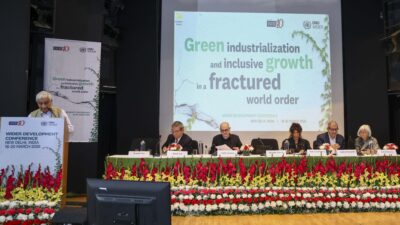
| ISID hosted the 2026 WIDER Development Conference on Green Industrialisation and Inclusive Growth in a Fractured World Order in New Delhi from March 18–20, 2026. The Conference brought together leading researchers, policymakers, and practitioners to discuss how growth, governance, and global cooperation are being reshaped amid geopolitical realignment and economic fragmentation.
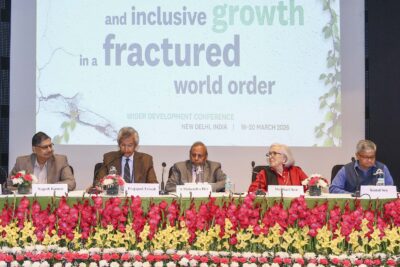
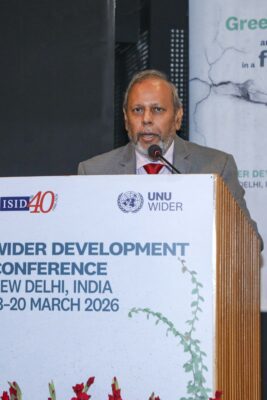
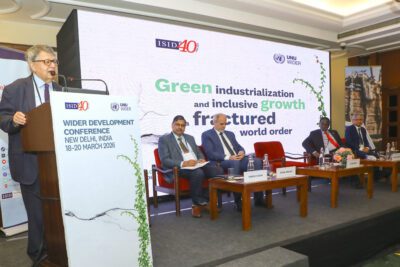
The conference opened with an inaugural session, featuring opening remarks by Prof Nagesh Kumar, Director, ISID and Prof Kunal Sen, Director, UNU-WIDER; Mr Stefan Priesner, United Nations Resident Coordinator in India; and, Prof Tshilidzi Marwala, Rector, United Nations University. This was followed by an inaugural address by Mr Suman Bery, Vice Chairperson, NITI Aayog. The opening was followed by a keynote lecture delivered by Prof Eric Verhoogen, Columbia University on barriers to industrial upgrading in developing countries. This segment, moderated by Prof Martha Chen of Harvard University, had remarks by two panellists, Mr Ajay Shankar, Distinguished Visiting Fellow at ISID and Dr Zainab Usman of Carnegie Endowment in the USA and open discussion with the audience. The session set the context by highlighting structural challenges in manufacturing, productivity, and energy transition financing, along with the implications of geopolitical fragmentation for development strategy. |
  |
| The Conference featured three high-level plenaries and 16 parallel thematic sessions with over 200 participants from across the world.
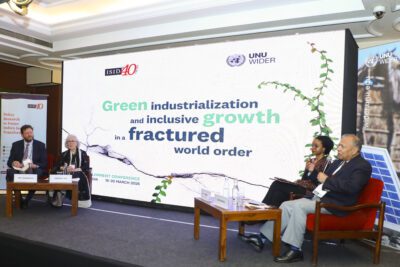
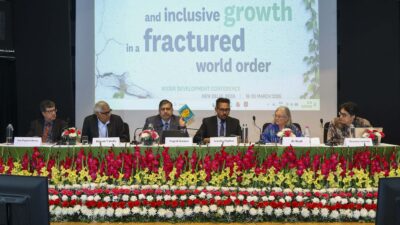
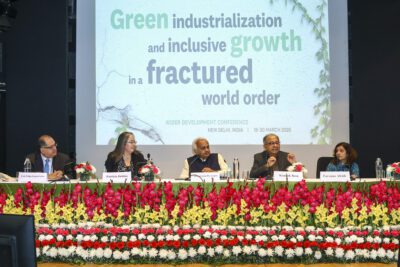
The first high-level plenary focused on the Future of Global Economic Governance in a Fragmented World Order, chaired by Prof Deepak Nayyar, Vice-Chairman, ISID. The speakers included Amb. Len Ishmael from the Policy Centre of the New South, Rabat, Morocco; Prof Justin Lin, Dean of the Institute of New Structural Economics at Peking University, Dr Caren Grown, Director of Brookings Center for Sustainable Development, Dr Stephen Klingebiel of the German Institute of Development and Sustainability (IDOS), Bonn, and Prof Andrew Sumner of King’s College London. The theme of the second plenary was Green Industrial Transformation in BRICS Countries. It was moderated by Prof Arkebe Oqubay, British Academy Global Professor, SOAS and former Minister, Ethiopian Government. The Speakers included Prof Nagesh Kumar, Director, ISID; Prof Imraan Valodia, Pro Vice-Chancellor, Wits University, South Africa; Prof Jose Puppim Oliveira, Getulio Vargas Foundation, Brazil; Dr Maxensius Sambodo, Indonesian Institute of Sciences; and Prof Jo Beall, Distinguished Policy Fellow at LSE Cities. The third plenary focused on Trust and Multilateralism, moderated by Prof Shantayanan Devarajan, Georgetown University, with speakers namely Prof Kaushik Basu, Cornell University, Dr Luis Felipe López-Calva, Global Director, The World Bank, Prof Patricia Justino, Director-Designate, UNU-WIDER, and Prof Frazana Afridi of the Indian Statistical Institute, Delhi. |
   |
| The conference concluded with the valedictory address by Prof S Mahendra Dev, Chairman, Economic Advisory Council to the Prime Minister. Prof Dev situated India’s green industrialisation agenda within a broader strategy centred on energy security, manufacturing, employment, and inclusive growth, emphasising the role of a balanced mix of policy, innovation, and collective effort in advancing sustainable development. The session was chaired by Prof Prajapati Trivedi, Visiting Professor at ISID and at the Harvard Kennedy School of Government.
The deliberations in the plenaries and the parallel sessions highlighted how geopolitical realignment and economic fragmentation are reshaping growth and governance, underscoring the need to expand policy space for developing economies, reform multilateral frameworks and development finance, and strengthen domestic industrial capabilities through coordinated policy action, public investment, and inclusive just transition strategies. Overall, the conference emphasised that delivering equitable growth in an increasingly uncertain global environment requires coordinated industrial policy, stronger institutions, and deeper international cooperation. |
Explore the programme here |
Session-wise YouTube links18th March:
19th March:
20th March: Media Coverage:
|
|
|
| The 2026 WIDER Development Conference brings together leading researchers, policymakers, and practitioners to examine how growth, governance, and global cooperation are being reshaped in an era of geopolitical realignment and economic fragmentation. Co-hosted with the Institute for Studies in Industrial Development (ISID), the event takes place in New Delhi and explores how Global South countries can navigate shifting power structures while advancing inclusive and sustainable development.
The conference addresses themes central to today’s development agenda, including the future of multilateralism, the rise of South–South trade and investment, the just energy transition, industrial policy for structural transformation, and the implications of protectionism and global debt distress for long-term growth. Through keynote lectures, high-level plenaries, and parallel research sessions, participants engage with cutting-edge evidence on how global economic governance must evolve to meet the needs of the Global South. By convening diverse voices from across academia, government, multilateral institutions, and philanthropy, the conference provides a vital platform for shaping policy debates on equitable growth and global cooperation. It forms part of UNU-WIDER’s continuing efforts to generate rigorous research, foster policy dialogue, and support partners in responding to the challenges and opportunities of a rapidly changing world order. More details on speakers, themes, and sessions will be available soon. The programme features an inaugural session with opening remarks by Nagesh Kumar and Kunal Sen, special remarks from senior UN and Government of India representatives, and an inaugural address by Suman Bery, Vice-Chairman of NITI Aayog. The keynote lecture, delivered by Eric Verhoogen (Columbia University), is followed by a distinguished discussion with Ajay Shankar and Zainab Usman. The conference includes three high-level policy plenaries: one on the future of global economic governance in a fragmented world order with Len Ishmael, Andy Sumner, Justin Lin, Caren Grown, and Stephan Klingebiel; one on green industrial transformation in BRICS countries with Arkebe Oqubay, Nagesh Kumar, Imraan Valodia, Jose Puppim Oliveira, Maxensius Sambodo, and Jo Beall; and a final plenary on trust and multilateralism featuring Kaushik Basu, Luis Felipe López-Calva, Nora Lustig, and Patricia Justino. Across three days, the conference also includes twelve parallel sessions on themes such as growth empirics, gender, intergenerational mobility, South–South trade, climate shocks, governance, and inclusive growth, along with a special session on green industrialization, dedicated poster sessions, an India-focused fireside chat, and a networking dinners and receptions. |